
Forensic Medicine and the Deposition Roles
What You Will Learn in This Chapter
A courtroom is not a clinic. The rules of evidence, the burdens of proof, and the relationship between you and the person you examined are all different, and a clinician who walks in expecting the norms of practice to apply will be surprised in ways that damage both the case and their own credibility.
This unit orients you to that setting. You will learn what makes a legal action adversarial, who the trier of fact is, and what separates the fact or treating witness from the expert witness. That distinction matters more than any other in this section, because it determines what you are permitted to say. A treating clinician subpoenaed about a client testifies to what they observed. An expert testifies to what the evidence means.
You will then examine what neuroscience evidence actually does in court, which is less than its advocates hope and more than its critics allow. You will learn where qEEG findings carry weight, why they carry it, and where the ecological gap between an impairment and a real-world behavior should make you cautious. The unit closes with the structures a testifying expert must know: legal settings, levels of authority, burdens of proof, capacity and competence, and the Federal Rules of Evidence.
IQCB Blueprint Coverage: This unit addresses IX. Clinical Practice/Forensic, specifically B. Recognizing the difference in deposition as a fact or treating witness versus an expert witness.
Learning Objectives
After completing this section, you will be able to:
Define adversarial and forensic, and explain what makes a legal action different from a clinical encounter.
Distinguish the fact or treating witness from the expert witness in terms of what each may testify to.
Summarize the seven categories of forensic neuroscientific evidence described by Jones (2013).
Describe what the research shows about the effect of neuroscience evidence and brain images on legal decision-making.
Explain why qEEG findings carry evidentiary weight and identify the ecological validity problem that limits them.
Compare the burdens of proof in administrative, civil, and criminal actions.
Distinguish capacity from competence, and explain who decides each.
Identify the Federal Rules of Evidence governing relevance, lay witnesses, expert witnesses, hearsay, and ultimate opinions.
Click the button below to hear the lecture over the Clinical Practice and Forensic unit.
What Makes an Action Forensic
Actions of a legal nature involve applications of laws to adjudicate differences, where the term "law" derives from "lex," the Latin word for law. These legal actions are adversarial in the sense that they "involve two or more interested parties who must reach a resolution of a common concern or disagreement from potentially antagonistic positions" (Sweet, Kaufman, Ecklund-Johnson, & Malina, 2018, p. 857). Such legal actions are sometimes called forensic, a word based on the Latin word "forum," which was a place for public debate in Rome.
Legal disputes to settle differences often require expert testimony, which in some cases is testimony about health or medical conditions. Medical testimony does not necessarily require a physician, but it does require testimony by experts who are accepted or qualified by a judge to provide an opinion within their scope of expertise. Similarly, the terms "medical" and "medicine" are defined as involving not only physicians but also the many disciplines that provide assessment and treatment for a range of health conditions.
Neuroscience Evidence
Aono, Yaffe, and Kober (2019) review the history of neuroscience in court and define neuroscientific evidence as any information about the brain. Neuroscientific evidence has been used in court since the early 20th century, with its use in criminal cases increasing in the 21st century.
As Jones (2013) summarized, there are seven main categories of forensic neuroscientific evidence. These are "buttressing (the use of neuroscience as supporting evidence); detecting (the use of neuroscience to gain otherwise elusive insights, such as the extent of brain injuries); sorting (the use of neuroscience to categorize people into legal classifications, such as sane versus insane); challenging (the use of neuroscience to challenge an institutionalized assumption); intervening (the use of neuroscience to create and recommend interventions); explaining (the use of neuroscience to shed light on uncontested, yet not well understood phenomenon); and predicting (the use of neuroscience to help make predictions about people's future behavior)" (Aono et al., 2019, p. 4).
Neuroscientific evidence can be used like any other evidence to establish or dispute a claim. For instance, neuroscientific evidence could support or challenge the credibility of an expert witness, increase or decrease the likelihood of a diagnosis, support testimony about a defendant's state of mind, show the severity of injury, or help the trier of fact understand some other evidence. An overview of the discipline of so-called neurolaw is given by Jones and Shen (2011).
Effects of Neuroscience Evidence on Legal Decision-Making
Research to date suggests that neuroscientific evidence has some mitigating effects, for example, in cases of the death penalty (Aono et al., 2019). While neuroscience testimony may affect the verdict, the finding of insanity, and sentencing, the type of mental disorder, such as schizophrenia versus psychopathy, and perceived dangerousness may also moderate this effect. However, brain images alone have little persuasive effect despite their allure in nonlegal contexts (Aono et al., 2019, p. 17).
As summarized by Aono et al. (2019), experimental comparisons of expert testimony to expert testimony plus neuroimages show no significant mitigating effect among mock jurors with respect to their verdict or sentence severity. Although initial studies suggested that neuroimages were uniquely persuasive, such effects were not replicated.
Aono et al. (2019) summarize results from the studies they reviewed, writing that neuroscientific evidence reduced death penalty sentences across studies under most conditions and increased not guilty by reason of insanity (NGRI) verdicts, but did not increase non-NGRI not guilty verdicts or influence length of prison sentences.
Aono et al. (2019) suggest that neuroscientific evidence might be mitigating because jurors see such evidence as more satisfying and impactful, consistent with research supporting the idea that jurors prefer reductive evidence across the neurosciences (p. 18). This remains an open question.
An additional hypothesis supported by some studies suggests that neuroscientific evidence may mitigate jurors' perception that the defendant has less-than-normal self-control. According to Aono et al. (2019, p. 19), the mechanism by which neuroscience evidence has mitigating effects is likely juror perception and other cognitive factors. However, no study has addressed this hypothesis directly.
Other gaps in the studies reviewed by Aono et al. (2019) are the investigation of effects due to race, sex, and cases that do not involve murder or assault, such as property and drug crimes. Citing Greene and Cohen (2004), Aono et al. (2019) wrote that it is "ultimately possible that the greatest contribution of neuroscience to criminal justice will be its influence on how people think about free will, responsibility, and treatability in the context of criminal behavior, rather than to influence the legal decisions they make" (p. 19).
Neuroscience evidence is not magic, and it is not theater. Reviews of the mock-juror literature show that it mitigates death penalty sentences and raises insanity verdicts, but does not shift ordinary not-guilty verdicts or prison sentence lengths. The much-discussed seductive power of a brain image did not replicate. What persuades is the expert testimony, not the picture beside it, which is a useful thing to remember when a lawyer asks you to make your exhibits more colorful.
Neuroimaging in Court
Miller and Lindbergh (2017) offer a recent review of various neuroimaging methods, how they may be helpful in forensic settings, and cautions to bear in mind. As they summarize, Meixner (2015) writes that the "basic function of the law is to regulate behavior, and neuroimaging methods are among the most powerful, robust, and objective tools available to shed light on the biological mechanisms underlying behavior" (p. 129).
Miller and Lindbergh (2017) focus their review of structural and functional neuroimaging methods in court with respect to brain damage and mild traumatic brain injury, discussing EEG techniques only in the category of functional neuroimaging. Their review provides an overview of each method, its strengths and weaknesses, and its relevance for forensic testimony.
These authors note that functional neuroimaging, with its emphasis on physiological and metabolic activity, complements methods that assess structural integrity. Functional neuroimaging can be especially important because brain injury and recovery are dynamic, with sequelae that unfold over time across several levels of analysis, including individual neurons, networks, cognition, emotion, and behavior. That is, qEEG findings may help track an injury's evolution and recovery.
As discussed by Miller and Lindbergh (2017), qEEG measures provide important information about brain regions' connectivity and the timing and direction of neuronal activity. Compared to other methods, qEEG data, like MEG and ERP data, have excellent time resolution but limited spatial resolution and depth of signal detection.
Furthermore, qEEG methods have limited specificity, in the sense that a pattern of qEEG findings is rarely limited to only one specific condition, and limited reliability, in the sense of producing findings replicated across scientific studies. Nevertheless, EEG data have the potential to supplement the diagnosis and treatment of many disorders, including mood disorders, learning disabilities, schizophrenia, chronic pain, and Alzheimer's disease (Leiser, Dunlop, Bowlby, & Devilbiss, 2011).
EEG methods are also prominent in the monitoring of epileptic conditions (Maganti & Rutecki, 2013), with Gutmann (2007) describing its application in the famous case of Jack Ruby, who shot and killed President John F. Kennedy's assassin, Lee Harvey Oswald.
Miller and Lindbergh (2017) indicate that qEEG can be especially relevant to cases of traumatic brain injury because of its superior temporal resolution, but also that EEG is not routinely used following traumatic brain damage. Studies investigating EEG have shown somewhat inconsistent findings, though generalized or focal slow wave activity and attenuated posterior alpha activity have been reported within several hours post-injury (Nuwer, Hovda, Schrader, & Vespa, 2005).
Different investigators have found different EEG abnormalities, such as generalized bursting, or the absence of abnormality entirely (Arciniegas, 2011). Different severities of TBI may account for such discrepancies, with excess slow-wave activity being more likely among severely injured patients (Thatcher, North, Curtin, Walker, Biver, Gomez, & Salazar, 2001).
EEG measured within 24 hours of TBI has some predictive value, showing a correlation between abnormality and outcome 23 years later when factored in with posttraumatic amnesia (Hessen & Nestvold, 2009). Persisting EEG abnormality is predicted by the degree of abnormality in the acute phase of injury (Rapp et al., 2015).
Changes in the ratio of local to distant connectivity, that is, reduced theta clustering, have been found after mild TBI (Tsirka et al., 2011) and interpreted as showing neural disorganization. Despite the typical normalization of EEG changes within a few months post mild TBI, some findings, such as diffuse intermixed slowing, may continue in some cases. However, this may be due to confounds such as medication (Arciniegas, 2011).
Forensic Value of qEEG Findings
Presentation of qEEG results in forensic settings helps to inform the court about a litigant or claimant's brain health and how that might be related to the person's behavior, cognition, or emotional functioning, so that the trier of fact, whether a judge or jury, can better make a just legal decision such as a verdict or sentence in the case. Because of its quantitative nature, use of normative values, and basis in brain science, qEEG findings can serve as a credible source of information in legal proceedings.
qEEG findings may be of interest in forensic cases for several reasons. Because the brain has an extremely significant role to play in behavior, the understanding that qEEG provides about the brain's integrity can help the trier of fact make well-informed decisions about the nature and degree of injury, its effects on the brain, and about disability, prognosis, and culpability.
The quantitative nature of qEEG findings imparts them with an objective character, particularly because findings are compared to norms. The scientific foundation of qEEG methods leads to a discussion that is helpful in forensic hearings insofar as it embodies consideration of hypotheses and their alternatives regarding the subject's diagnosis or condition, levels of certainty, an acknowledgment that studies have limitations, willingness to address potential criticisms, and demonstration of reasoning that logically traces propositions from the general, nomothetic scientific literature to the specific idiographic individual case in the context in which it occurs. These qualities parallel the types of thinking that the trier of fact must employ to reach their decision.
qEEG findings can be likened to findings from any other medical tests, particularly other biological tests of brain structure and function such as CT, MRI, and fMRI (Miller & Lindbergh, 2017). They are meaningless unless interpreted in the context of personal history, other tests, normative values, and the network of research on which brain science is based.
The degree to which such interpretation can be usefully made in any legal case depends on its relevance, the scientific reliability and validity of the method, the type of findings that bear on the case, and the expertise of the professional who conducts the interpretation. At the least, interpretation of qEEG results should be made by a professional who is thoroughly knowledgeable about the EEG and how it is measured, scientific and statistical methods, and applying qEEG findings to cases resembling the one at issue. Further, an interpretation should be made by someone who thoroughly understands brain-behavior relationships and health at levels of impairment, disability, and handicap (Carter, 2023; Thatcher, 2010).
The Ecological Validity Problem
qEEG findings provide information about the possible location and type of brain dysfunction a litigant may present, whether defendant, plaintiff, or claimant. Such findings may implicate disruption of central nervous system structures and their interactions. However, mere disruption of function, that is, an impairment, may be irrelevant unless the functions involved and related abilities are pertinent to the mental condition or behavior at issue in the legal proceedings.
The ecological validity of qEEG findings is at stake and is best supported by logical reasoning and empirical links between CNS function and real-world behavior. For example, a qEEG finding of significantly abnormal cortical activity in the left frontotemporal region, an impairment, is only imperfectly correlated with language function, an ability, let alone with use of language at the sales desk of an auto parts store, a participation in a vocational role.
Therefore, qEEG findings may be only one thread in the entire fabric of evidence weighed by the trier of fact when they decide that the totality of evidence reaches the threshold of the civil or criminal burden of proof, that is, the balance of probabilities or beyond a reasonable doubt, respectively.
qEEG findings carry more weight when they are consistent with other case-related data. They may be considered in terms of their consistency with the claimed etiology of a brain injury, the severity of damage documented by other means, and behavioral observations (Greiffenstein & Kaufmann, 2018).
Consistency with nomothetic, that is, general scientific, factors is also important to consider. For example, do the qEEG findings conform to a nomothetic dose-response curve where more severe damage has reliably been found with scientific methods to produce more severe qEEG findings? Or do qEEG findings of dysfunction in the orbitofrontal region conform to a scientifically reliable association between damage to that region and disinhibited behavior?
qEEG findings are one piece of data that can help the trier of fact appreciate that an individual's thinking, emotion, or behavior has been or is currently affected by brain dysfunction. In civil and criminal matters, qEEG results may be one of several objective data points that converge to help the trier of fact.
If the question is one of diagnosis and its effects, qEEG findings alone will not answer it. However, a qEEG finding that shows dysfunction of particular regions of interest or networks may converge with other findings related to cognition, emotional function, and behavior. For example, a finding of disinhibition in the context of neuropsychological test results, physical examination, and behavioral observations may be strengthened when qEEG results show dysfunction of the orbitofrontal cortex, with the additional provision of scientific knowledge to the trier of fact that this region is involved in inhibitory control.
You are retained in a civil matter and find significantly abnormal activity over the left frontotemporal region of a plaintiff who worked as a parts counter clerk before his injury. The tempting testimony is that the finding explains why he can no longer do his job. Do not give it. The chain from impairment to ability to participation has two weak links, and opposing counsel will find both. What you can defensibly say is that the finding is consistent with disruption in a region reliably associated with language function, that this class of disruption is associated with the kinds of difficulty documented in his neuropsychological testing, and that the connection to his performance at the counter is a matter for the trier of fact weighing the whole record.
Staging Severity and the Problem of Mild TBI
qEEG findings may be of value for the trier of fact insofar as they help to stage the severity of brain dysfunction (Greiffenstein & Kaufmann, 2018). This may be the case even with mild traumatic brain injury, a condition that presents many thorny conundrums.
For example, many clinical neuropsychologists assert that late post-concussive symptoms following mild TBI, that is, symptoms that begin following concussion and continue for a year or longer, are most likely not due to any persistent neurobiological dysfunction or structural damage. They relate instead to a complex of psychological, social, and environmental factors that perpetuate early symptoms or worsen predisposing conditions.
The genuine, though transitory, disruption of neurochemical and network connectivity processes seen in mild TBI may, however, be an immediate effect of the precipitating concussive event, along with its associated physical and psychological trauma and consequent disruption of functional activities.
Objective qEEG findings, either soon after injury or in the several months following, may demonstrate changes in connectivity measures (Thatcher, Walker, Gerson, & Geisler, 1989) and in this way help the trier of fact to consider the possibility that biological changes related to injury may have been significantly involved in the initiation of cognitive, emotional, and behavioral changes.
An immediate brain-related datum that is consistent with the severity of a precipitating injury may then be understood as showing changes in the brain that contribute to the initiation of injury-related impairment and disability, which in turn are maintained by perpetuating factors of a psychological and socially mediated type acting on a person who may have predisposing vulnerabilities. Nevertheless, recent research shows that mild TBI can produce lasting changes to the brain that may also be involved in persistent symptoms.
There is typically a dose-response relationship following TBI, with injury severity positively correlated with the severity of cognitive impairment. Nonetheless, it is wise to heed Greiffenstein and Kaufmann's (2018, p. 902) advice to "always be open to new and objective case-specific information that may 'trump' base rates and provide compelling evidence" of long-term symptoms attributable to mild TBI.
Whereas many clinical neuropsychologists assert that there are virtually no measurable cognitive differences several months post-injury between groups of mild TBI and normal subjects, such findings may not account for the increased effort required by mild TBI subjects to achieve normal performance levels. As attributed to Carl Sagan, absence of evidence is not evidence of absence.
To that point, there is accumulating research showing evidence of cellular, perfusion, and both functional and structural connectivity changes long after mild TBI among some subjects, which may have implications for emotional function, independent activities of daily living, socialization, and work performance (Chan et al., 2015; Dall'Acqua et al., 2017; Kan et al., 2012; Lemme et al., 2021; Papadaki et al., 2021).
The trier of fact may find the objective qEEG findings probative and contributing to the body of evidence they use to judge whether the event at issue and its injuries have led to persisting loss of function that merits compensation.
Nevertheless, in cases of mild TBI, neurotoxicity, or other maladies, it is important to avoid reasoning that an exposure or trauma of a magnitude that does not normally lead to persistent, significant brain injury, plus nonspecific subjective complaints, is sufficient proof of chronic changes to the brain that can only be found with qEEG methods. Knowing the relevant science and avoiding reasoning beyond one's data is important.
The greatest value of neuroimaging and qEEG in court is when it is integrated with data from other sources. Miller and Lindbergh (2017) suggest that several studies have found that neuroimaging improves the accuracy of specific conclusions about brain injury and its meaningful consequences, and that complementary methods such as qEEG and fMRI are prime candidates for combination (Mayer, Bellgowan, & Hanlon, 2015).
Check Your Understanding
- Define adversarial and forensic, and explain why a clinical relationship changes character when litigation is involved.
- Name and briefly describe four of the seven categories of forensic neuroscientific evidence identified by Jones (2013).
- What does the mock-juror research show about the persuasive effect of brain images compared with expert testimony alone?
- Explain the ecological validity problem using the sequence of impairment, ability, and participation.
- Why does a dose-response relationship between injury severity and qEEG findings strengthen testimony?
Legal Settings for Testimony
The settings in which expert testimony occurs may be formal, in which case they may occur in a courtroom and involve criminal actions such as the insanity defense, mitigation of culpability, and death penalty sentencing; civil actions such as personal injury and medical malpractice; probate-related matters; or family law such as custody and divorce. On the other hand, informal settings address matters such as administrative actions, including disability determination, fitness for duty, educational entitlement, and alternate dispute resolution.
These different settings and types of actions often differ in their level of burdens of proof, rules of evidence, and trier of fact. Instead of providing qEEG services to a patient who wants health care assessment and treatment, qEEG findings in forensic contexts fall outside usual clinical care and require the expert witness to be knowledgeable about the specific rules that apply to the type of action for which testimony is provided (Sweet et al., 2018).
The specialty knowledge regarding qEEG findings is given to the trier of fact, that is, a judge, jury, or panel, so that they can decide the case of a litigant, meaning a defendant or plaintiff in formal court proceedings, or a claimant, also called an applicant in less formal proceedings. Regardless of the setting, testimony about qEEG should help educate the trier of fact to make the legal decision that is their sole responsibility.
Administrative settings are a hybrid between civil court and adjudication by government agencies, as in the case of worker's compensation claims. A magistrate holds a hearing in which the magistrate and other hearing officers determine the facts using somewhat relaxed rules of evidence. As in license revocation, a governmental agency may be a party to a dispute. The burden of proof is usually the preponderance of evidence.
Probate settings probe into facts related to the creation and execution of wills.
Civil settings adjudicate issues of liability and damages, with the preponderance of evidence being the standard of proof. Issues of fact that the jury may decide are whether there is a neurological injury and whether such injury resulted in deficits.
Civil and administrative legal actions are tort suits. Civil torts, such as car collisions and medical malpractice, address matters of duty, foreseeability, negligence, causation, and damages. Administrative torts involve seeking compensation of a legal benefit where causation is not an issue, such as educational accommodations.
Criminal settings involve issues that may infringe liberty, for example, when a defendant is in jeopardy of incarceration or execution following a conviction of guilt. In criminal settings, the burden of proof is much higher than in civil cases, and conviction rests on a finding that culpability is established beyond a reasonable doubt.
Levels of Legal Authority
The structure of the law involves issues of authority, where greater authority is more favorable to one party or another in a legal action. As outlined by Greiffenstein and Kaufmann (2018), there are several types of authority, including primary, secondary, binding, and persuasive.
Primary authority, such as case law and regulations, derives from the government directly and requires court interpretation. Secondary authority includes opinions and commentaries set out, for example, by an attorney general or a governmental agency.
Only laws with primary authority can be binding or controlling in their application, depending on jurisdiction and the specific facts in a case. If an earlier finding with primary authority is binding in a current case, then the current case must base its decision on the earlier finding. On the other hand, other laws and findings may not be binding but only persuasive, based on their use of reasoning, factual similarities, or judicial reputation.
Court opinions may be either published or unpublished. Published decisions, such as the U.S. Supreme Court's decision in Daubert v. Merrell Dow Pharms., Inc. (1993), have broad scope that judges must follow in future actions. Unpublished decisions involve rulings that apply with limited scope to a particular case.
In the United States, a hierarchy of legal authority in the court system prevails in criminal matters.
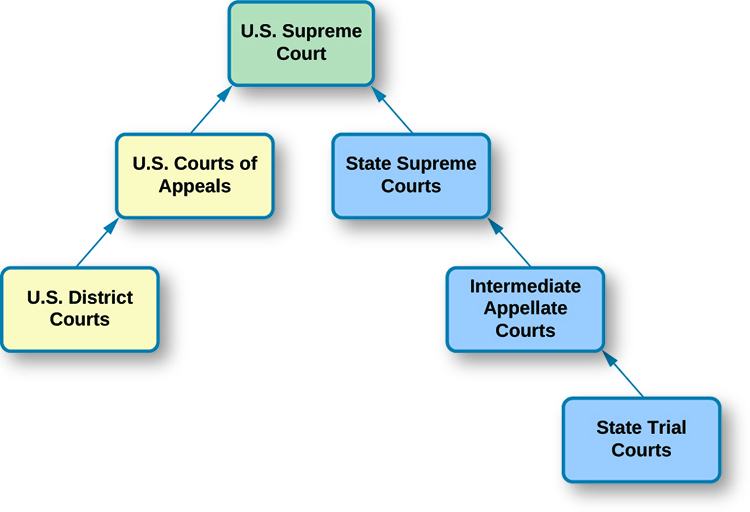
Federal cases are tried first in U.S. District Courts. Convictions can be appealed to a U.S. Court of Appeal, also known as a circuit or appellate court. Subsequently, the case may be appealed to the U.S. Supreme Court.
State cases are first tried in state trial courts and may be appealed to intermediate state appellate courts before being appealed to the state Supreme Court. Cases may also then be appealed to the U.S. Supreme Court.
Trier of Fact and Burden of Proof
In any legal setting, the final judgment or decision is made by the trier of fact, who may be a judge, a panel of adjudicators, or a jury. Only the trier of fact can decide ultimate legal questions, for instance, of causation, such as whether this gunshot wound caused this plaintiff's brain damage.
qEEG testimony can provide a penultimate opinion just short of the ultimate question by saying, for example, that the qEEG findings are consistent with a penetrating brain injury of the type found in the plaintiff, or with ADHD in an administrative case involving access to benefits or accommodations.
Civil and criminal trials have different burdens of proof, that is, the level of certainty with which the trier of fact reaches their verdict.
In civil litigation, the lowest standard of proof is used: balance of probabilities or preponderance of the evidence. This means that the evidence proves the point at issue with over 50% confidence. In criminal litigation, a higher burden of proof is required, being beyond a reasonable doubt. This is often interpreted as certainty of about 90%. Clear and convincing proof is an intermediary standard of certainty of about 75%.
In criminal trials, the defendant enters with a presumption of innocence, and the state or federal authority that brings charges carries the burden of proof to persuade the trier of fact beyond a reasonable doubt that the defendant committed the crime charged. An exception is the claim of insanity, when the defendant has the burden of proving to the trier of fact that they were insane at the time of the crime. Many jurisdictions require insanity to meet only the clear and convincing standard. In civil cases, the applicant or plaintiff must prove their case against the defendant.
Three burdens of proof govern the settings you may testify in. Civil and most administrative matters use the preponderance of the evidence, above 50% confidence. Some matters, including insanity claims in many jurisdictions, use clear and convincing evidence, roughly 75%. Criminal conviction requires proof beyond a reasonable doubt, roughly 90%. Your opinion is offered into one of these standards, and stating your own level of certainty in terms the trier of fact can map onto theirs is part of testifying well.
Capacity and Competence
Insanity is a legal term that, according to the Legal Information Institute of Cornell Law School:
refers to a mental illness or disease that makes it impossible for a defendant to know they were committing a crime or to understand that their actions are wrong. A defendant found to be criminally insane can assert an insanity defense. Insanity functions as a failure of proof defense where the defendant admits to having committed the wrongful act, but claims they are not culpable because their mental defect prevented them from establishing the required mental state.
Tests to determine if a defendant is criminally insane vary from state to state. For instance, any jurisdiction that follows the Model Penal Code rule looks to see if the defendant lacked both substantial capacity to appreciate the wrongness of their actions and substantial capacity to conform their actions to the law. Jurisdictions that follow common law tests are primarily split between the M'Naghten Rule and the irresistible impulse test. Under the former, a party is criminally insane if they lacked the capacity to know they were committing a crime due to a mental defect. Under the latter, a defendant is criminally insane if they lacked total capacity to conform with the law.
Issues of capacity and competency can be involved in civil matters. Mental capacity refers to the functional ability to carry out a specific activity, such as medical decision-making, making a contract, or communicating with counsel.
In contrast to an expert witness's testimony about capacity, competence is determined by a judge or legal body, relying on evidence that a medical condition is causative. In competency hearings, capacity is only one consideration. In criminal trials as well, competence may be an issue.
According to Sweet et al. (2018), types of competencies relate to waiving Miranda rights, waiving the right to counsel, standing trial, understanding advisements of rights and validity of confessions, entering a plea, criminal responsibility, the advisability of the defendant testifying, sentencing, and being executed.
Federal Rules of Evidence
The trier of fact in a legal proceeding uses evidence and reasoning to reach a verdict. One source of evidence is from expert witnesses. A judge uses rules of evidence to qualify an expert witness to present particular pieces of evidence and to admit evidence to a court.
Types of Evidence
Depending on its relevance, evidence may be prejudicial or probative. Prejudicial evidence is not admissible because of its likelihood of producing strong emotional reactions among jurors that may sway their reasoning and decision unfairly. Probative evidence is admissible and likely to be directly relevant to juror decisions. If evidence is both probative and prejudicial, a judge may weigh one against the other to judge the merit of admitting it.
The testimony or opinion provided by an expert must be probative and relevant and not prejudicial, or the testimony must at least be more probative than prejudicial on balance.
Greiffenstein and Kaufmann (2018) review Federal Rules of Evidence that are relevant for neuroscientific testimony, for example, by neuropsychologists. They are likely to interest those presenting qEEG findings in court. These rules for the admissibility of evidence and for qualifying expert witnesses to testify are substantially in force in most U.S. states.
As Greiffenstein and Kaufmann (2018) summarized, Rule 401 defines evidence as relevant when it makes "the existence of any fact that is of consequence to the determination of the action more probable or less probable than it would be without the evidence." Rule 402 further specifies that evidence not be overly prejudicial.
Fact or Treating Witness Versus Expert Witness
Two types of witnesses are mentioned in the Federal Rules of Evidence. Lay or fact witnesses, under FRE 701, present evidence they have acquired only by their senses. For example, lay witnesses include treating health professionals or bystanders who saw an event occur.
A second type of witness is an expert witness, under FRE 702, who gives an opinion about the meaning of evidence. The expert is qualified to testify by their knowledge, skill, experience, training, or education. A witness whom a judge has qualified to testify may provide an opinion if the testimony is based on sufficient facts or data.
Testimony must be the product of reliable principles and methods, and the expert must reliably apply the principles and methods to the facts of the case. In the case of qEEG testimony, the expert helps the trier of fact understand the evidence and what the findings mean. This may involve presenting scientific information about the brain-behavior relationship, the development and use of qEEG methods, electroencephalographic activity and its relationship to brain dysfunction, the relationship of any qEEG abnormality to potential brain or behavioral dysfunction, and the relationship of qEEG findings to behavior.
FRE 703 is a so-called hearsay rule that allows the qEEG expert to provide an opinion on non-qEEG data so long as it is reasonably relied upon by experts in a particular field. This allows opinions regarding plaintiff, defendant, or applicant history and reports produced by other experts to be integrated with the qEEG findings.
FRE 704 sets boundaries for expert opinion and addresses the issue of penultimate and ultimate opinions. The first part of this rule allows experts to give opinions similar to the legal decisions of the trier of fact, and the second part specifies that the expert must not give ultimate opinions regarding a defendant's state of mind.
For example, an expert may say that qEEG findings are likely to have been caused by an accident like the one at issue, with cognitive or behavioral disturbances likely to be of a particular type. Still, they may not give an opinion about how those findings or disturbances bear on criminal culpability, which is the ultimate decision and the responsibility of the trier of fact. An example of an appropriate penultimate opinion might be that the defendant was likely suffering from a significant brain disturbance consistent with a traumatic brain injury, which may have been associated with significant cognitive and behavioral disturbances around the time of the crime.
The fact witness and the expert witness are two different jobs. A treating clinician subpoenaed about a client is a fact witness under FRE 701 and testifies to what they perceived. An expert under FRE 702 gives an opinion about what evidence means, and must first be qualified by the judge. FRE 703 lets the qEEG expert build on data they did not generate, provided experts in the field reasonably rely on it. FRE 704 draws the line you must not cross: penultimate opinions are yours to give, ultimate opinions belong to the trier of fact.
Check Your Understanding
- State the burden of proof for a civil matter, an insanity claim in many jurisdictions, and a criminal conviction, with the approximate confidence each represents.
- Distinguish capacity from competence, and identify who determines each.
- Under which Federal Rule does a treating clinician testify, and how does that constrain what they may say?
- Give an example of a penultimate opinion about qEEG findings and an ultimate opinion that FRE 704 forbids.
- Explain the difference between primary and secondary authority, and between binding and persuasive findings.
Cutting-Edge Topics in qEEG Research
The Seductive-Image Effect Did Not Replicate
For a decade the field assumed that showing a jury a brain image conferred unearned credibility. Aono, Yaffe, and Kober (2019) reviewed the experimental literature and found that early demonstrations of this effect failed to replicate. Expert testimony plus a neuroimage did not outperform expert testimony alone on verdicts or sentence severity. This is a rare case of a forensic assumption being retired by data, and it should change how you think about exhibit design.
Persistent Changes After Mild TBI
The long-standing position that late post-concussive symptoms are psychosocial rather than neurobiological is under active revision. Studies of cerebrovascular reactivity (Chan et al., 2015), one-year network recovery (Dall'Acqua et al., 2017), perfusion and psychoemotional outcome (Papadaki et al., 2021), and post-traumatic headache network connectivity in youth (Lemme et al., 2021) have documented changes persisting well beyond the expected recovery window. None of this licenses overclaiming, but it does mean the base-rate argument is no longer the whole story.
Multimodal Combination Is the Direction of Travel
Miller and Lindbergh (2017) and Mayer, Bellgowan, and Hanlon (2015) both point toward combining methods whose weaknesses are complementary. The qEEG has fine temporal resolution and poor spatial resolution, fMRI the reverse. Studies pairing them improve the accuracy of conclusions about brain injury and its consequences, and forensic reports increasingly present converging evidence from several modalities rather than resting on one.
Assignment
Now that you have completed this unit, explain the difference between testifying as a fact or treating witness and testifying as an expert witness. Describe a situation in which you might be called as each, and identify what you could say in one role that you could not say in the other.
Glossary
actus reus: the physical act of the crime.
administrative actions: informal legal proceedings addressing matters such as disability determination, fitness for duty, educational entitlement, or alternative dispute resolution.
admissibility: the legal standard governing whether a court will allow evidence to be presented at trial, set in federal courts by Federal Rule of Evidence 702 and the Daubert line of cases.
adversarial: involving two or more parties with opposing interests who must resolve a shared dispute, as in a trial or contested hearing.
amicus curiae: friend of the court, a person or organization who presents information of interest in the case.
appellate court: a court that reviews the decisions of lower courts for legal error, deciding on the existing record rather than hearing new evidence.
applicant: the party in an administrative proceeding who seeks a benefit, accommodation, license reinstatement, or similar relief from the deciding agency.
balance of probabilities: a level of certainty with which an opinion is offered such that the opinion is more likely than not, or more than 50 percent likely to be true.
binding or controlling: the status of a prior court decision that later courts must follow in subsequent legal actions.
burden of proof: the obligation of the prosecution in criminal matters or the plaintiff in civil matters to prove its claim to the required standard, whether a preponderance of the evidence, clear and convincing evidence, or beyond a reasonable doubt.
capacity: the functional ability to carry out a specific activity, such as completing personal activities of daily living.
certainty: the confidence level with which a verdict is found or an expert witness provides an opinion.
certiorari: an order from a superior court to a lower court asking for a certified case record.
circuit court: a court whose jurisdiction covers several districts or counties; in the federal system a U.S. Court of Appeals, though in many states a trial court of general jurisdiction.
civil law: the body of law governing noncriminal disputes between private parties, including personal injury, liability, negligence, and malpractice claims.
claimant: a litigant in an administrative legal matter who is applying for benefits, accommodation, license reinstatement, and the like.
clear and convincing: an intermediary burden of proof representing certainty of about 75%, higher than the preponderance of evidence but lower than beyond a reasonable doubt.
competence: the demonstrated ability to apply relevant knowledge, skills, judgment, and ethical standards to professional tasks.
criminal law: the body of law defining offenses against the public, classified as felonies or misdemeanors, and prescribing punishment for those convicted of committing them.
culpability: responsibility for wrongdoing or failure.
Daubert: the 1993 U.S. Supreme Court decision in Daubert v. Merrell Dow Pharmaceuticals that made trial judges gatekeepers of expert testimony, weighing testability, peer review, known error rate, controlling standards, and general acceptance.
defendant: the person accused of committing a crime or injury.
expert witness: a witness qualified by knowledge, skill, experience, training, or education beyond a layperson's, and therefore permitted to offer opinion testimony.
fact witness: a witness who testifies only to that of which they have firsthand knowledge and who describes only facts, as opposed to expressing opinions.
family law: a branch of law that deals with matters relating to the family, such as divorce and child custody.
Federal Rules of Evidence: a set of rules that governs the introduction of evidence at civil and criminal trials in United States federal trial courts.
forensic: pertaining to legal proceedings.
hierarchy of legal authority: the ranked ordering of binding legal sources and courts, from the U.S. Constitution and statutes downward, and from the Supreme Court through courts of appeal to trial courts.
in camera meetings: a private proceeding held in the judge's chambers or a closed courtroom, outside the presence of the jury and the public, to review sensitive evidence.
ipse dixit: an assertion or statement made by an individual based solely on their own authority, without any supporting evidence or proof.
liability: one party's legal obligation to another party that they have injured or whose property they have damaged.
litigant: a person involved in a civil legal case, either because they are making a formal complaint about someone or because a complaint is being made about them; a claimant, party, or plaintiff.
mens rea: the culpable mental state accompanying a criminal act, such as intent, knowledge, recklessness, or negligence, which the prosecution must prove as an element of the offense.
mitigation: a complex, multi-pronged approach to preparing for sentencing for a defendant's crime to reduce or lessen the effects of aggravating factors.
not guilty by reason of insanity (NGRI) verdict: a verdict in which the defendant admits the wrongful act but is found not culpable because a mental defect prevented them from forming the required mental state.
opinion: a conclusion or inference drawn from perceived facts, admissible as testimony when it concerns an issue beyond the ordinary experience of the trier of fact.
penultimate question: the question that is next to last, before the ultimate question of fact or guilt is decided by the trier of fact.
persuasive: sufficiently convincing that a reasonable trier of fact could accept the claim as true, though not compelled to do so.
plaintiff: a person who brings an action; the party who complains or sues.
prejudicial: damaging to the fairness of a proceeding, as when evidence unfairly sways the trier of fact, confuses the issues, misleads, or wastes time out of proportion to its probative value.
preponderance of evidence: the burden of proof in civil law, requiring more than 50% certainty (also called the balance of probabilities).
primary authority: the law, which includes constitutions, statutes and ordinances, rules and regulations, and case law.
probate: the court-supervised process of proving a will’s validity and administering the deceased person’s estate.
probative: tending to prove a particular proposition or to persuade as to the truth of an allegation.
reasonable doubt: a doubt based on reason and common sense which must be logically based upon the evidence or lack of evidence.
reliability: the consistency or reproducibility of measurements across repeated observations, raters, items, or conditions.
scientific method: a method of procedure that has characterized natural science since the 17th century, consisting of systematic observation, measurement, and experiment, and the formulation, testing, and use of quantification and statistics, followed by the modification of hypotheses.
secondary authority: material that is not the law but that leads to the law or helps to explain the law.
sentence: a court order imposing the punishment or other consequences that follow a criminal conviction.
stare decisis: the principle that earlier decisions and precedents must be applied to current cases.
testimony: oral or written evidence given by the witness under oath, affidavit, or deposition during a trial or other legal procedures.
tort: a civil wrong, other than breach of contract, that causes injury or loss and for which a court may impose liability for damages.
trier of fact: the judge in a bench trial or the jury in a jury trial, who weighs the evidence and decides the disputed questions of fact.
ultimate question: the dispositive question the trier of fact must decide, such as whether a defendant is guilty or whether an injury caused the claimed impairment.
verdict: the decision that is given by the jury or judge at the end of a trial.
Test Yourself on ClassMarker
Click the button below to take a 10-question exam over this entire unit. There is no password.
Review Flash Cards on Quizlet
Click the button below to review our chapter flash cards.
References
Aono, D., Yaffe, G., & Kober, H. (2019). Neuroscientific evidence in the courtroom: A review. Cognitive Research: Principles and Implications, 4, 1-20. https://doi.org/10.1186/s41235-019-0179-y
Arciniegas, D. B. (2011). Clinical electrophysiologic assessments and mild traumatic brain injury: State-of-the-science and implications for clinical practice. International Journal of Psychophysiology, 82, 41-52. https://doi.org/10.1016/j.ijpsycho.2011.03.004
Carter, S. L. (2023). Impairment, disability, and handicap. Emory University School of Medicine. https://med.emory.edu/departments/pediatrics/divisions/neonatology/dpc/impairment-mx.html
Chan, S. T., Evans, K. C., Rosen, B. R., Song, T. Y., & Kwong, K. K. (2015). A case study of magnetic resonance imaging of cerebrovascular reactivity: A powerful imaging marker for mild traumatic brain injury. Brain Injury, 29(3), 403-407. https://doi.org/10.3109/02699052.2014.974209
Dall'Acqua, P., Johannes, S., Mica, L., Simmen, H. P., Glaab, R., Fandino, J., Schwendinger, M., Meier, C., Ulbrich, E. J., Müller, A., Baetschmann, H., Jäncke, L., & Hänggi, J. (2017). Functional and structural network recovery after mild traumatic brain injury: A 1-year longitudinal study. Frontiers in Human Neuroscience, 11, 280. https://doi.org/10.3389/fnhum.2017.00280
Daubert v. Merrell Dow Pharm., Inc., 509 U.S. 579 (1993).
Greene, J., & Cohen, J. (2004). For the law, neuroscience changes nothing and everything. Philosophical Transactions of the Royal Society B: Biological Sciences, 359(1451), 1775-1785. https://doi.org/10.1098/rstb.2004.1546
Greiffenstein, M. F., & Kaufmann, P. M. (2018). Basics of forensic neuropsychology. In J. E. Morgan & J. H. Ricker (Eds.), Textbook of clinical neuropsychology (2nd ed., pp. 887-926). Routledge.
Gutmann, L. (2007). Jack Ruby. Neurology, 68, 707-708. https://doi.org/10.1212/01.wnl.0000256034.72576.13
Hessen, E., & Nestvold, K. (2009). Indicators of complicated mild TBI predict MMPI-2 scores after 23 years. Brain Injury, 23, 234-242. https://doi.org/10.1080/02699050902748349
Jones, O. D. (2013). Seven ways neuroscience aids law. In A. M. Battro, S. Dehaene, M. S. Sorondo, & W. J. Singer (Eds.), Neurosciences and the human person: New perspectives on human activities (pp. 181-194). The Pontifical Academy of Sciences.
Jones, O. D., & Shen, F. X. (2011). Law and neuroscience in the United States. In T. M. Spranger (Ed.), International neurolaw: A comparative analysis. Springer.
Kan, E. M., Ling, E. A., & Lu, J. (2012). Microenvironment changes in mild traumatic brain injury. Brain Research Bulletin, 87(4-5), 359-372. https://doi.org/10.1016/j.brainresbull.2012.01.007
Legal Information Institute of Cornell Law School. (n.d.). Criminal insanity. Retrieved June 16, 2024, from https://www.law.cornell.edu/wex/criminal_insanity
Leiser, S. C., Dunlop, J., Bowlby, M. R., & Devilbiss, D. M. (2011). Aligning strategies for using EEG as a surrogate biomarker: A review of preclinical and clinical research. Biochemical Pharmacology, 81, 1408-1421. https://doi.org/10.1016/j.bcp.2010.10.002
Lemme, J., Holmes, S., Sibai, D., Mari, J., Simons, L. E., Burstein, R., Zurakowski, D., Lebel, A., O'Brien, M., Upadhyay, J., & Borsook, D. (2021). Altered brain network connectivity underlies persistent post-traumatic headache following mild traumatic brain injury in youth. Journal of Neurotrauma, 38(12), 1632-1641. https://doi.org/10.1089/neu.2020.7189
Maganti, R. K., & Rutecki, P. (2013). EEG and epilepsy monitoring. Continuum, 19, 598-622. https://doi.org/10.1212/01.CON.0000431378.51935.d8
Mayer, A. R., Bellgowan, P. S. F., & Hanlon, F. M. (2015). Functional magnetic resonance imaging of mild traumatic brain injury. Neuroscience and Biobehavioral Reviews, 49, 8-18. https://doi.org/10.1016/j.neubiorev.2014.11.016
Meixner, J. B. (2015). Applications of neuroscience in criminal law: Legal and methodological issues. Current Neurology and Neuroscience Reports, 15, 513. https://doi.org/10.1007/s11910-014-0513-1
Miller, S. L., & Lindbergh, C. A. (2017). Neuroimaging techniques in the courtroom. In S. S. Bush, G. J. Demakis, & M. L. Rohling (Eds.), APA handbook of forensic neuropsychology (pp. 111-144). American Psychological Association.
Nuwer, M. R., Hovda, D. A., Schrader, L. M., & Vespa, P. M. (2005). Routine and quantitative EEG in mild traumatic brain injury. Clinical Neurophysiology, 116, 2001-2025. https://doi.org/10.1016/j.clinph.2005.05.008
Papadaki, E., Kavroulakis, E., Manolitsi, K., Makrakis, D., Papastefanakis, E., Tsagaraki, P., Papadopoulou, S., Zampetakis, A., Malliou, M., Vakis, A., & Simos, P. (2021). Cerebral perfusion disturbances in chronic mild traumatic brain injury correlate with psychoemotional outcomes. Brain Imaging and Behavior, 15(3), 1438-1449. https://doi.org/10.1007/s11682-020-00343-1
Rapp, P. E., Keyser, D. O., Albano, A., Hernandez, R., Gibson, D. B., Zambon, R. A., Hairston, W. D., Hughes, J. D., Krystal, A., & Nichols, A. S. (2015). Traumatic brain injury detection using electrophysiological methods. Frontiers in Human Neuroscience, 9, 11. https://doi.org/10.3389/fnhum.2015.00011
Sweet, J. J., Kaufman, P. M., Ecklund-Johnson, E., & Malina, A. C. (2018). Forensic neuropsychology. In J. E. Morgan & J. H. Ricker (Eds.), Textbook of clinical neuropsychology (2nd ed., pp. 857-886). Routledge.
Thatcher, R. W. (2010). Minimal qualifications for an individual to be considered as a QEEG expert for purposes of admission of QEEG in a court of law. https://www.appliedneuroscience.com/PDFs/Minimal_Standards_for_qEEG_Experts.pdf
Thatcher, R. W., North, D. M., Curtin, R. T., Walker, R. A., Biver, C. J., Gomez, J. F., & Salazar, A. M. (2001). An EEG severity index of traumatic brain injury. Journal of Neuropsychiatry and Clinical Neurosciences, 13, 77-87. https://doi.org/10.1176/jnp.13.1.77
Thatcher, R. W., Walker, R. A., Gerson, I., & Geisler, F. (1989). EEG discriminant analyses of mild head trauma. EEG and Clinical Neurophysiology, 73, 93-106. https://doi.org/10.1016/0013-4694(89)90188-0
Tsirka, V., Simos, P. G., Vakis, A., Kanatsouli, K., Vourkas, M., Erimaki, S., Pachou, E., Stam, C. J., & Micheloyannis, S. (2011). Mild traumatic brain injury: Graph-model characterization of brain networks for episodic memory. International Journal of Psychophysiology, 79(2), 89-96. https://doi.org/10.1016/j.ijpsycho.2010.09.006